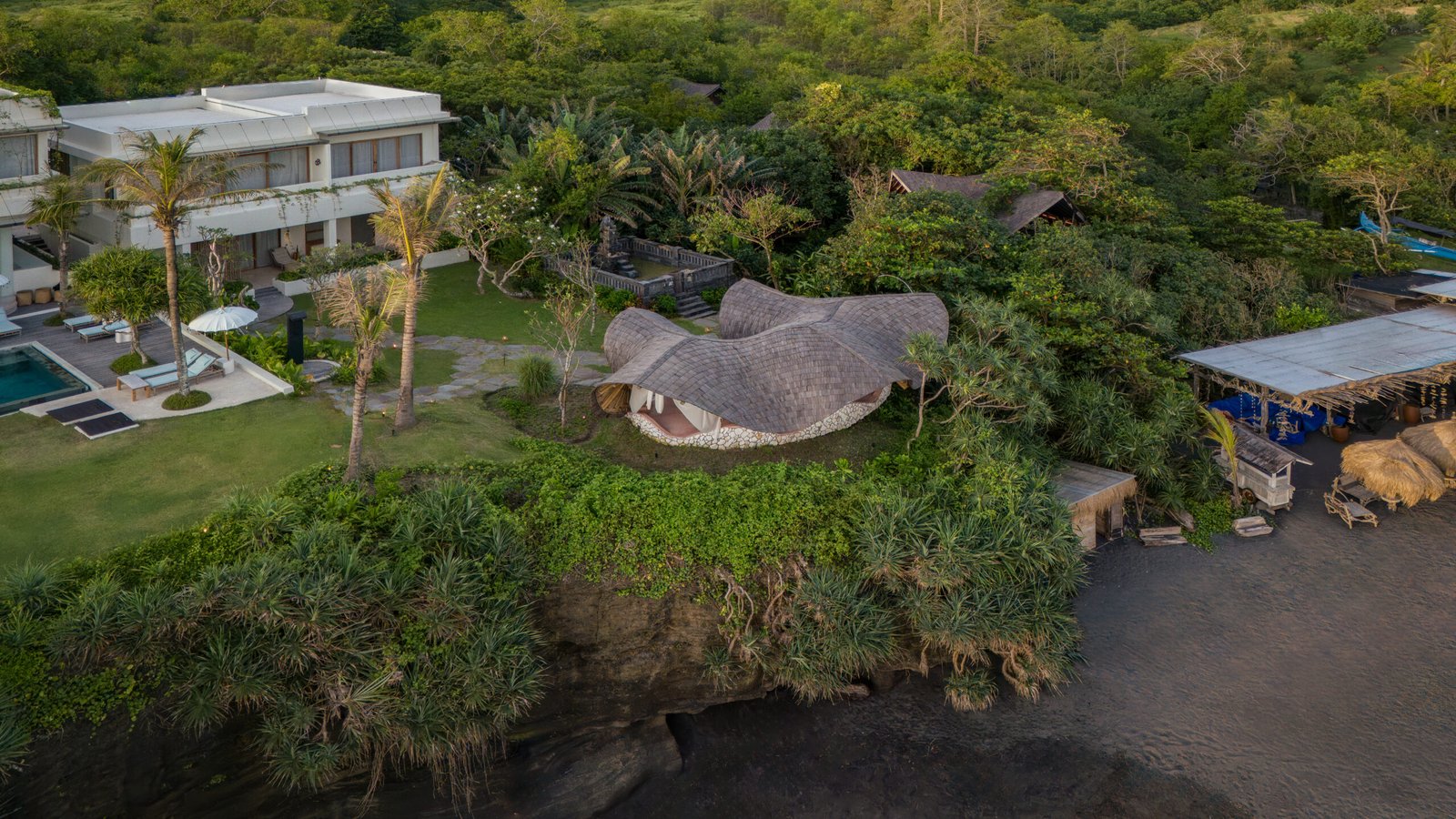

Take a journey into the wild: Intrepid travellers seeking an adventure of a lifetime in pristine national parks located only five hours away from Singapore, keep reading.

When we think of travel adventures—untouched nature, centuries-old culture, and ancient cave art—we often envision long plane journeys to distant, exotic locations, especially when departing from Singapore.
But merely five hours away from Singapore are pristine national parks so rich in nature, history and culture, that it would be a pity to exclude them from an intrepid traveller’s bucket list.
Enter Darwin, or what is collectively known as the Northern Territories in Australia. I spent five days in the remote and beautiful world of Kakadu National Park and the Garig Gunak Barlu National Park (Cobourg Marine Park) to disconnect from technology and reconnect with the self through a once-in-a-lifetime adventure. If you’re looking for intrepid inspirations for your next trip, read on.
Into the wild
Bright and early, with the nearby woods alive with nature’s symphony, my travel companions and myself were picked up from Vibe Hotel Darwin Waterfront Hotel by Venture North, a family-owned tourism operator specialising in small group cultural and nature-based tours across Northern Australia. We were in the good hands of David Mcmahon, who efficiently packed us into a four-wheel drive with a trailer, and wasted no time getting on the road.
From the six seasons of Kakadu National Park to foraging wildfire-toasted edible fruits by the road, David is an encyclopedia of interesting facts, and generous with those knowledge. You get this feeling that you are in good hands, and that was quickly tested as we hit the first snag in our trip: a burst tyre. Unfazed, he shrugged it off and efficiently ducked under the car to fix it before resuming our journey.

Our guide David gets down and dirty… to fix a burst tyre. (Photo: Stephanie Zheng)
The drive that followed was comparatively relaxing—though I say that lightly—because during those hours, we passed by wildfires blazing beside the road, visited a war cemetery, and took a break above a decommissioned gold mine discovered in 1871. A leisurely swim at Moline Rockhole and a picnic lunch rounded up the experience, and all that before the day was even halfway through.
The benefits of having a guide in this wild place is glaringly obvious to me. With everything meticulously planned, all I needed to do was show up and relish my surroundings. This realisation kept me in a pleasantly relaxed state as we drive towards Kakadu National Park, arriving at Yellow Water Villas at Cooinda Lodge for the night.

Nestled under a rich canopy of trees, the Yellow Water Villas is a luxurious and eco-sensitive accommodation adjacent to the Yellow Water Billabong (Ngurrungurrudjba). Not a single tree was cut down to accommodate the retreats, and they were built on stilts to minimise any impact on the land.
Inside, you have all the features of a luxurious hotel room, from gooseneck kettle to bathtub on the verandah, and a lush bed to rest the head. It took all my energy to peel myself off said bed to prepare for the sunset experience, the Yellow Water Cruise. Always on the ‘must-do’ list when visiting Kakadu, this serene two-hour sunset cruise brings tourists through a tranquil billabong fringed by pandanus, bamboo, paperbark, and monsoon rainforest—home to a variety of birdlife and saltwater crocodiles.

Lotus flower field (Photo: Stephanie Zheng)

Birdlife aplenty to spot on the cruise (Photo: Stephanie Zheng)
I honestly thought it was going to be too long a cruise, but thankfully, it’s not one of those tours where the operator yaps on and on. Planned silence gave us time to reflect on the beauty and sounds of the nature around us. It was strangely moving as we spot the wildlife going about their business, and cliche as it sounds, made me reflect on my place on this earth. There’s even a stargazing cruise for those into astronomy.

Sunset colours on the Yellow Water billabong (Photo: Stephanie Zheng)
This little piece of heaven should not be taken for granted. During flood seasons, the lodge cannot be accessed. Fortunately, it’s safe to visit during the dry season, when you can fully appreciate the grandeur of the plains.
After working up an appetite, don’t miss having a meal at Mimi’s Restaurant, where the chef served up some of the most tender buffalo steaks I’ve had in my life.
Spiritually connect with land
Arnhem Land is a vast, unspoiled wilderness deeply intertwined with the history and culture of Australia’s Aboriginal people. Spanning an immense 97,000 square kilometres, this region is characterised by rugged coastlines, remote islands, lush rainforests, towering escarpments, and savanna woodlands. Despite its size and significance, Arnhem Land receives fewer than 2,000 visitors annually—a stark contrast to Singapore’s bustling 734 square kilometres which welcomed 1.48 million visitors in March 2024 alone.
Reaching this remote area required us to journey from the Yellow Water Villas to the northern region of Kakadu National Park, where Arnhem Land lies. Access is highly restricted, with only a handful of companies permitted to enter, and even fewer granted deeper access into this sacred land. Visitors must obtain permits and be accompanied by local guides, ensuring that the land is treated with the respect it deserves.
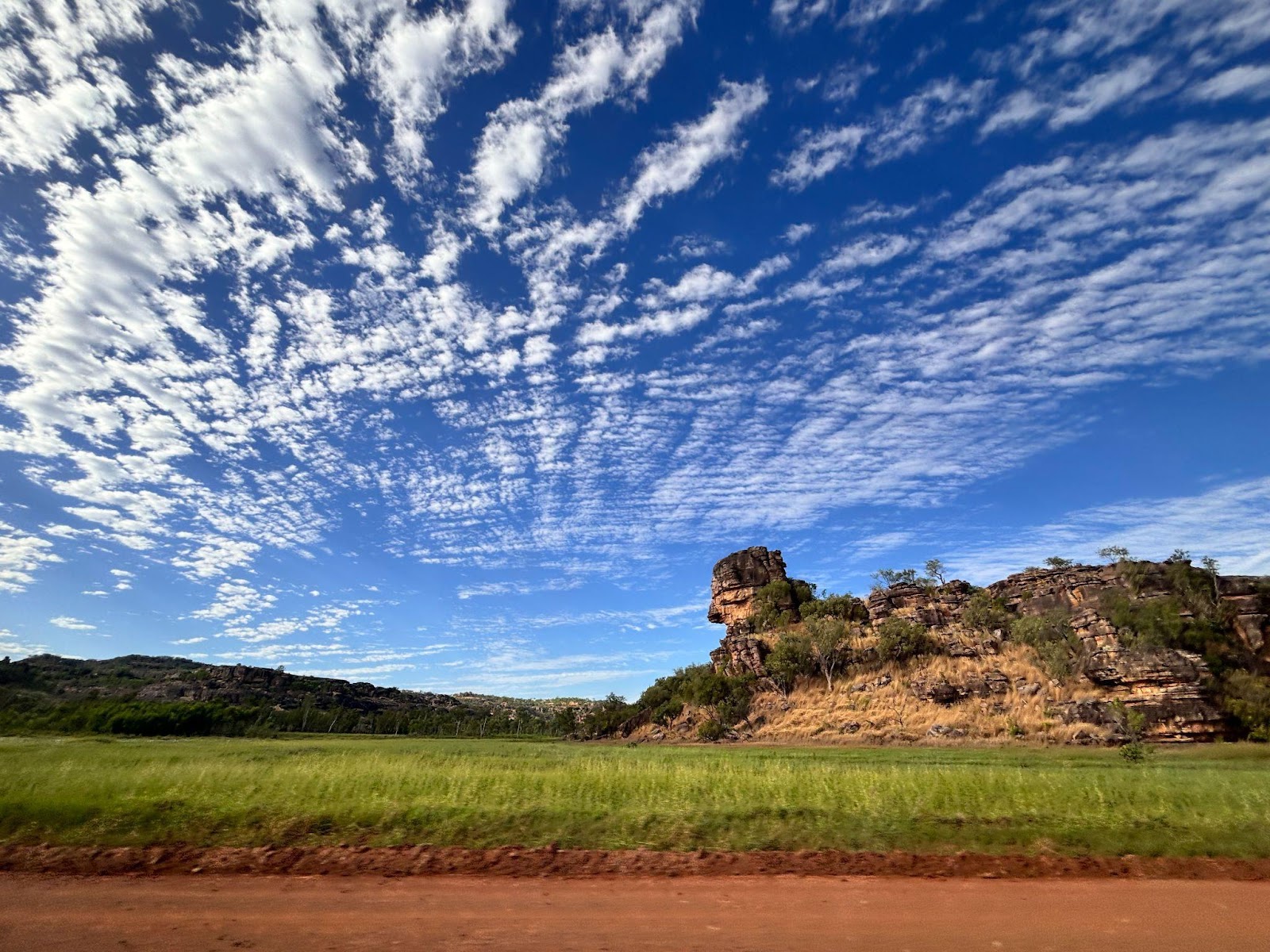
Stick your camera out and you’re bound to capture nature’s beauty at any time (Photo: Stephanie Zheng)
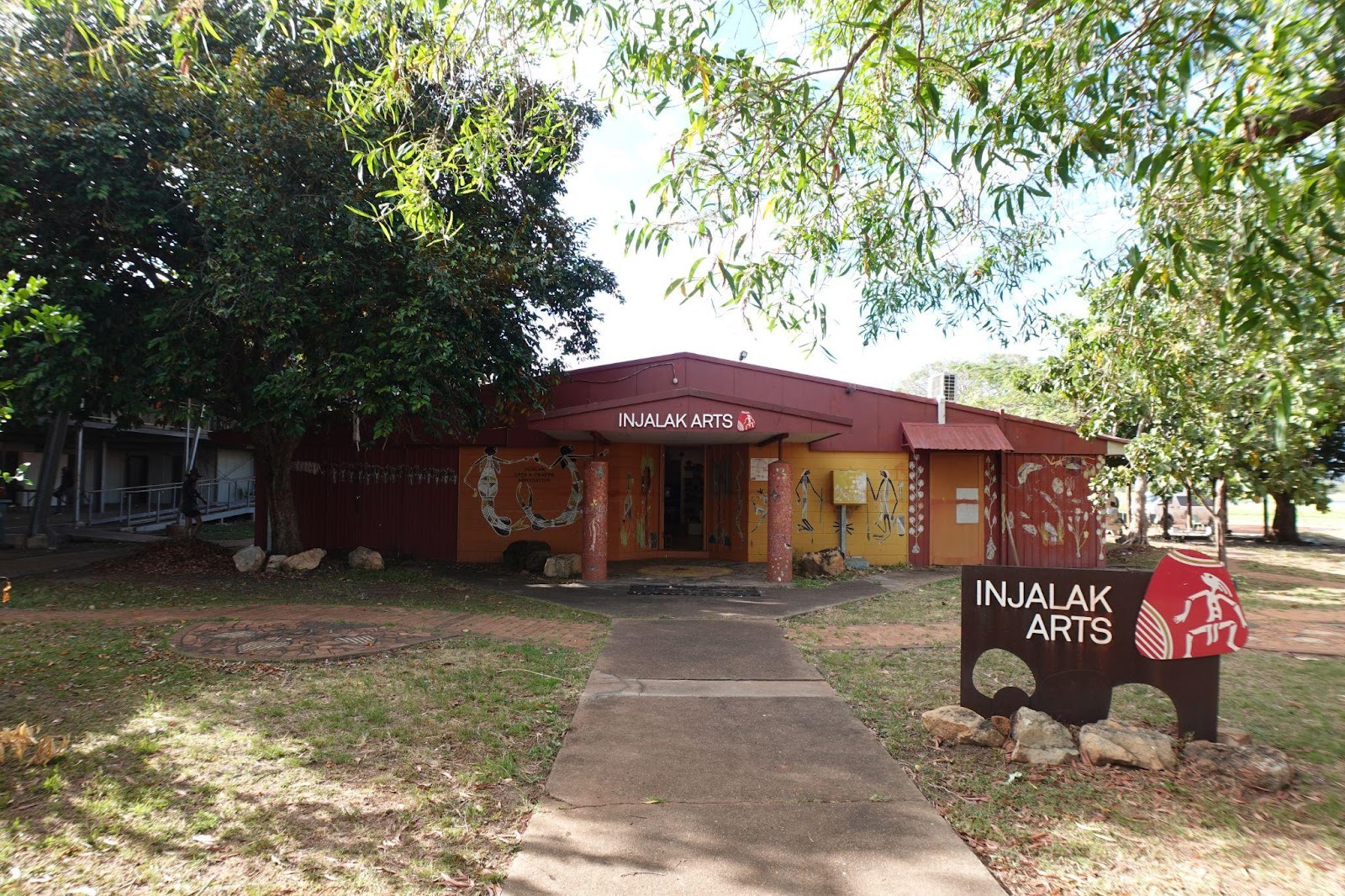
Our first stop upon arriving at Gunbalanya was the Injalak Arts and Craft Centre, where we met our guide, Shaun Namarnyilk—a skilled artist and a custodian of the land’s ancient stories.
Injalak Art Centre (Photo: Stephanie Zheng)
Shaun led us up Injalak Hill, a sandstone monolith steeped in traditional rock art and the tales of the Indigenous people who have inhabited this area for thousands of years.
Shaun introducing us to the various rock art of the area (Photo: Stephanie Zheng)
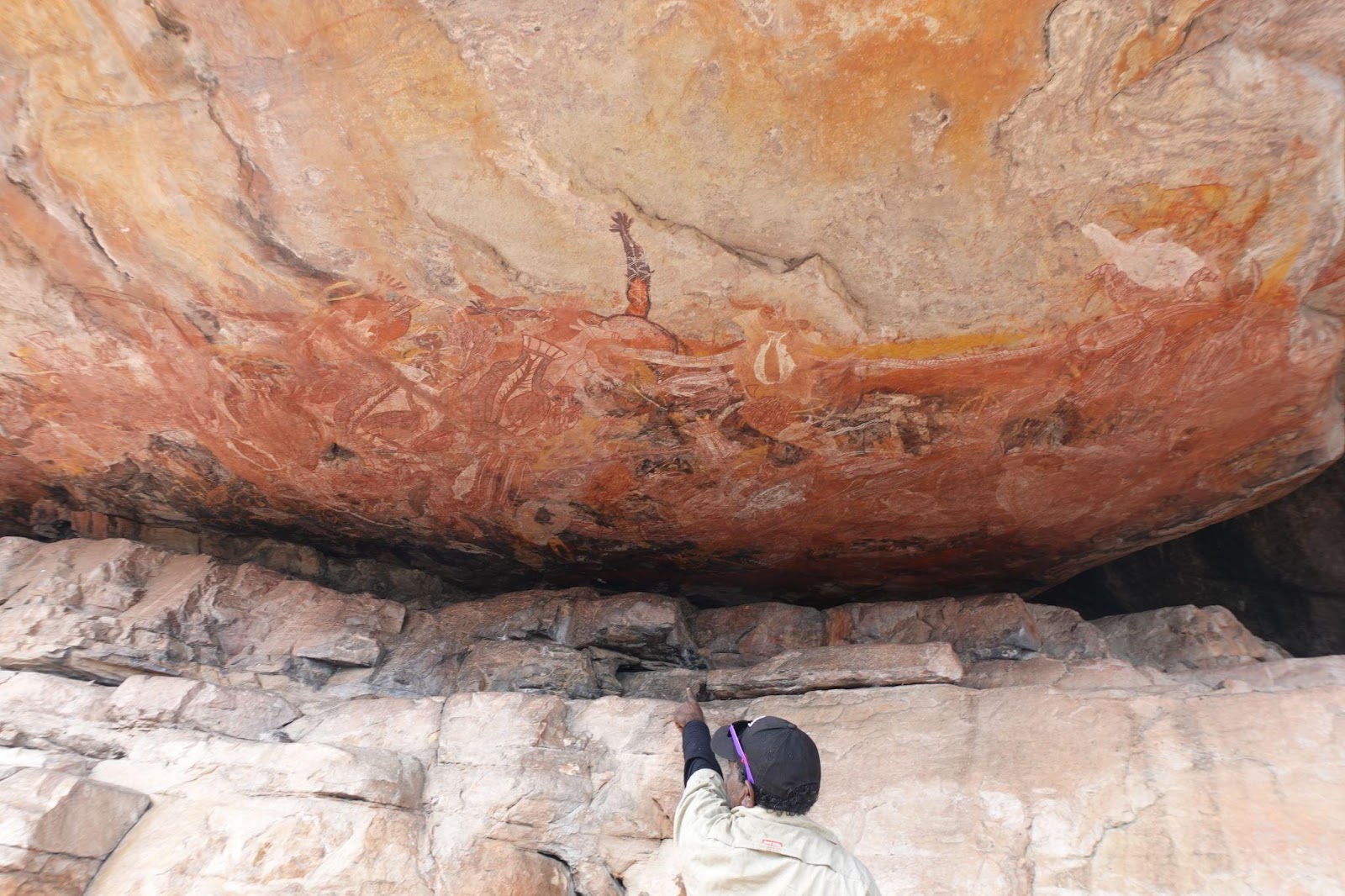
As we explored the rock art sites, Shaun introduced us to the unique ‘x-ray art’ style, depicting the internal structures of animals with remarkable detail. Shaun also shared stories of the land’s spiritual significance. He spoke of the spirits of the hill, which must be acknowledged upon entering the area. We learned of the Malawa, a mysterious entity with six fingers, which he believed caused him to become lost in the caves for two days. The vivid rock art depicted both the harmony and conflict of the ancient world, including images of Yingarna, the mother of creation, revered as the origin of life.
View from the top of Injalak Hill (Photo: Stephanie Zheng)
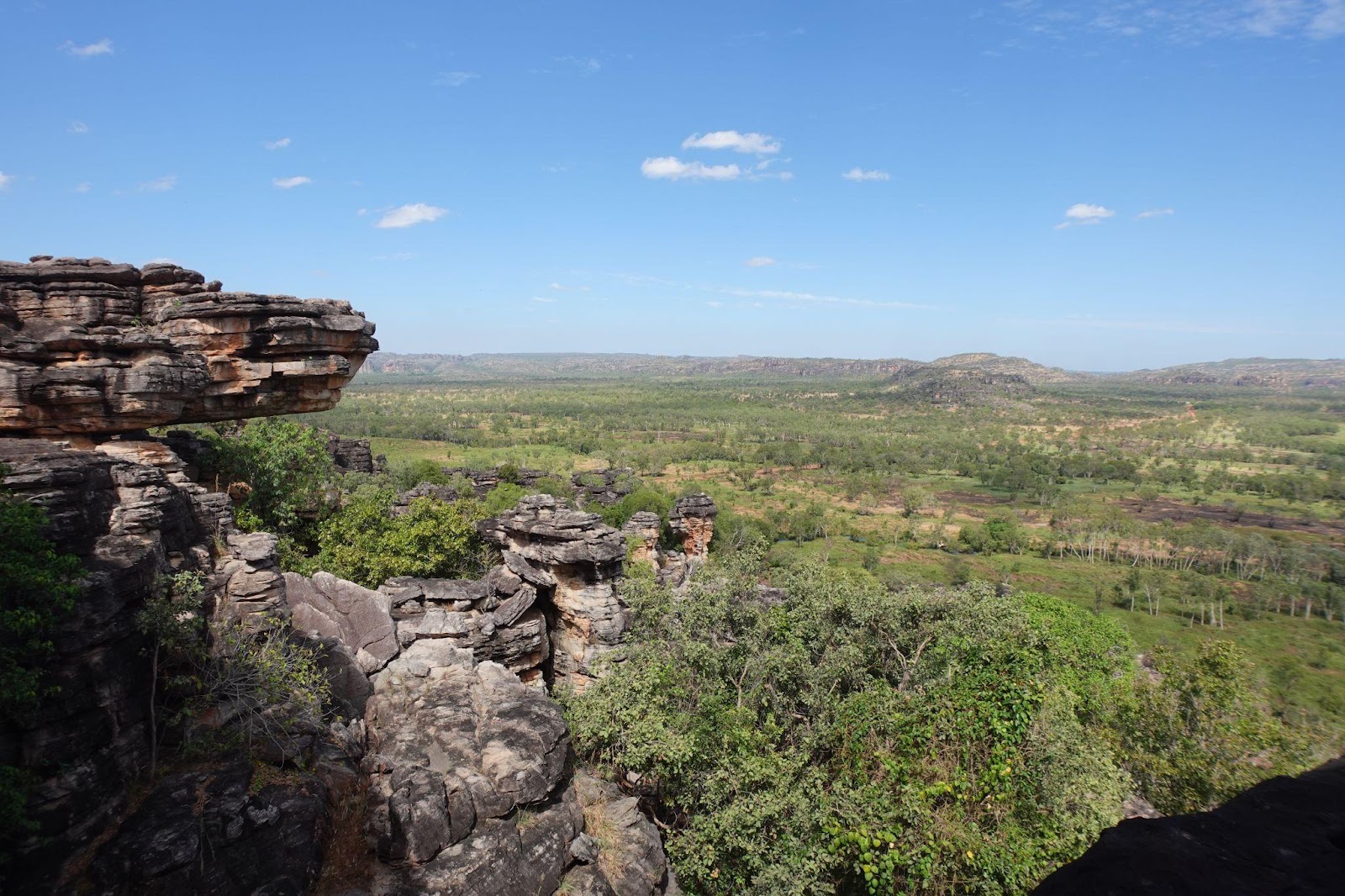
Rock formations on Injalak Hill (Photo: Stephanie Zheng)
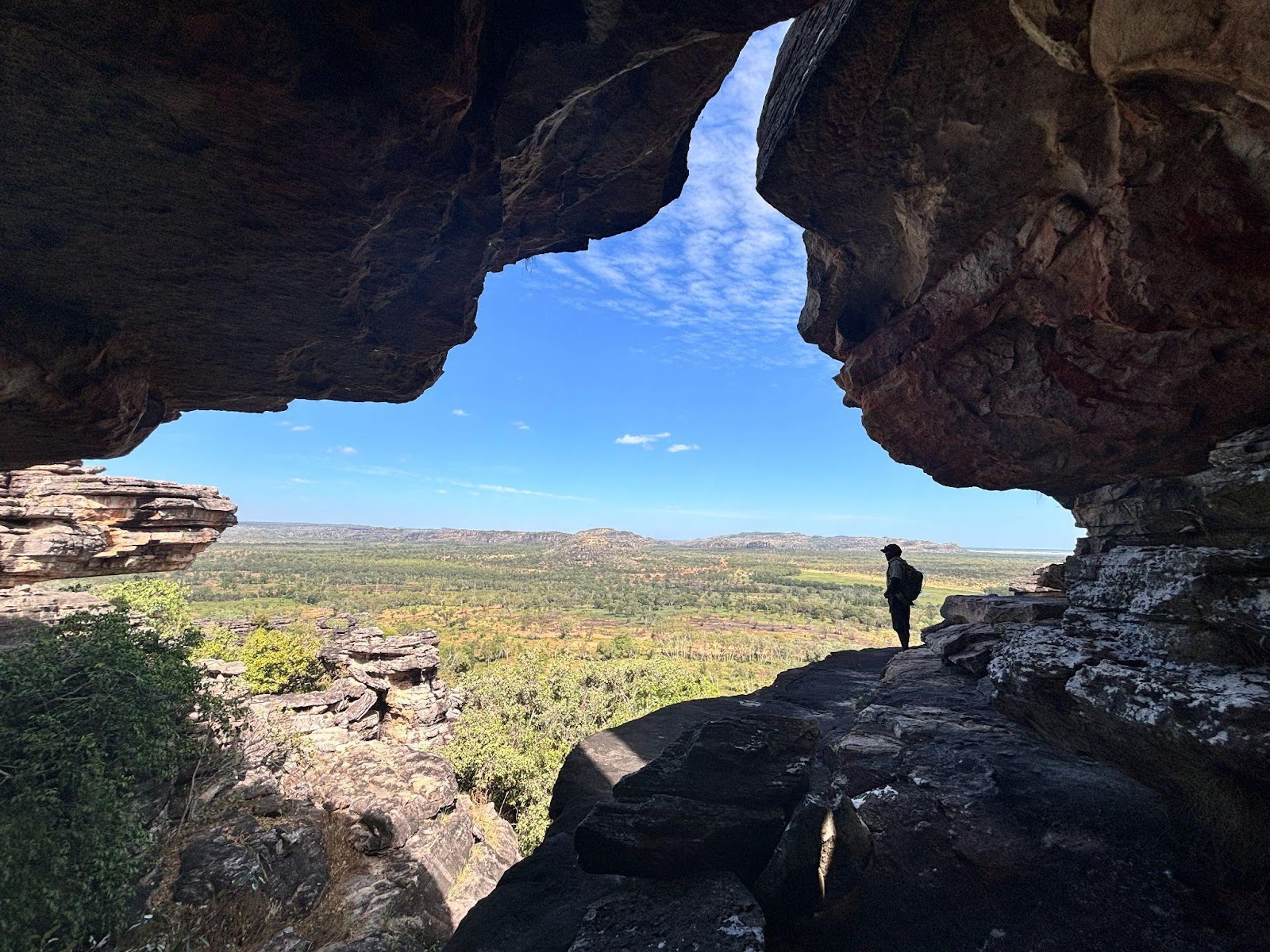
At the top of Injalak Hill, we stopped to catch our breath and admire the views. From our vantage point, Shaun suddenly pointed out a herd of wild pigs in the distance. I strained my eyes, but saw nothing—yet another reminder of how closely attuned he was to this land.
Shaun contemplating the flood plains. (Photo: Stephanie Zheng)
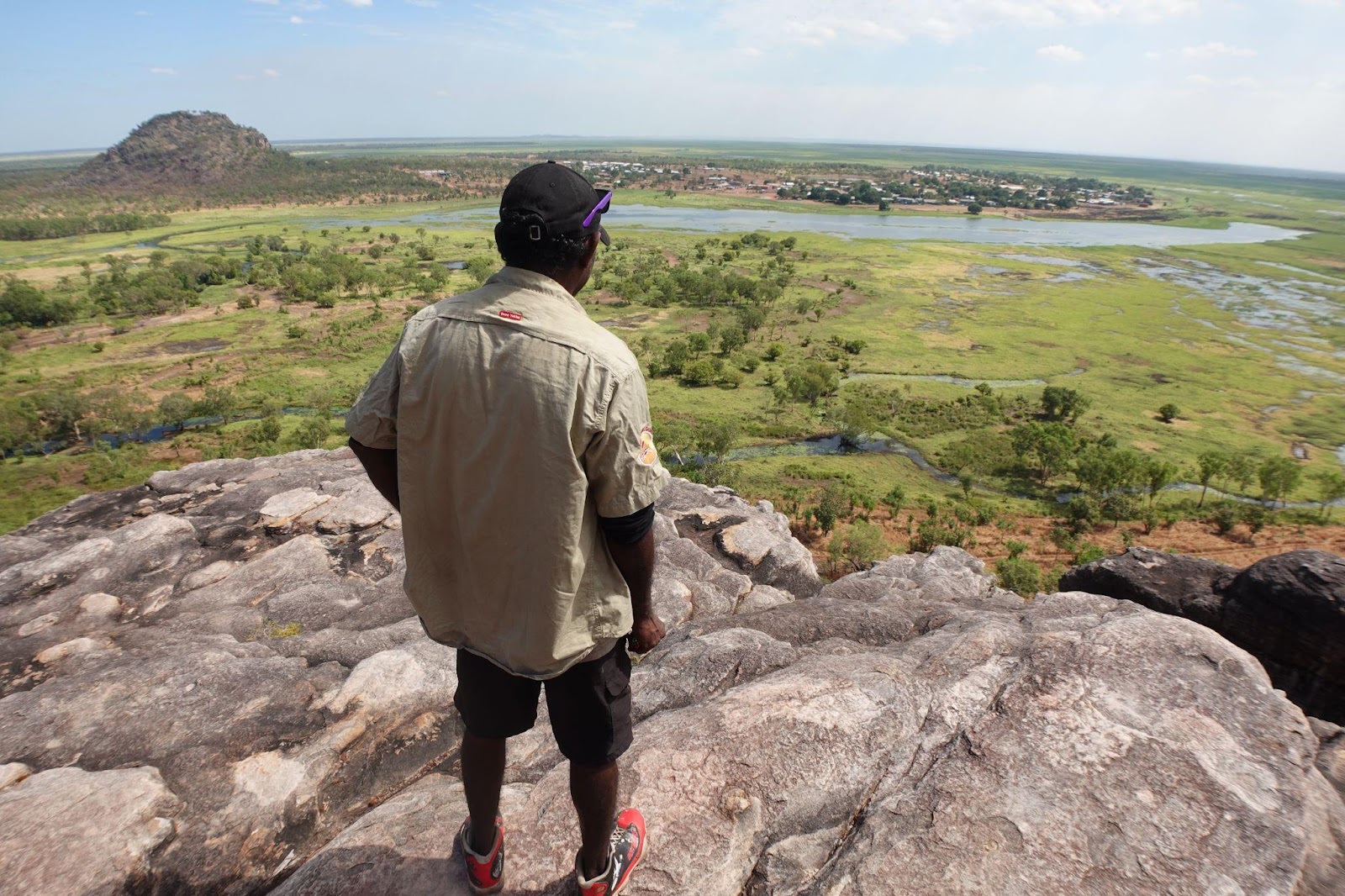
Shaun, also an artist, sells his work through the Injalak Arts and Craft Centre. 60% of the proceeds go directly to the artist, with the remaining 40% benefiting the broader Aboriginal community.
Fishing expeditions
After an enlightening afternoon at Arnhem Land, our journey continued to the northernmost tip of the region, the Cobourg Peninsula, which forms part of the Garig Gunak Barlu National Park. Cobourg Peninsula is accessible only by air, sea, or an unsealed road that’s open during the dry season (May-Ocober), and even then, a park permit is required.
The drive comes with occasional stops and creek crossings, and took us deeper into this remote wilderness. Upon arrival at Venture North’s private camp, we were warmly welcomed by the resident host with nibbles served atop the cliff, offering us the perfect vantage point to watch the sunset over Port Essington. The serene beauty of this place was only amplified by the absence of civilisation’s noise (as well as data and mobile connection), leaving us completely immersed in nature.
Just another day in the remote Cobourg Coastal Camp (Photo: Stephanie Zheng)
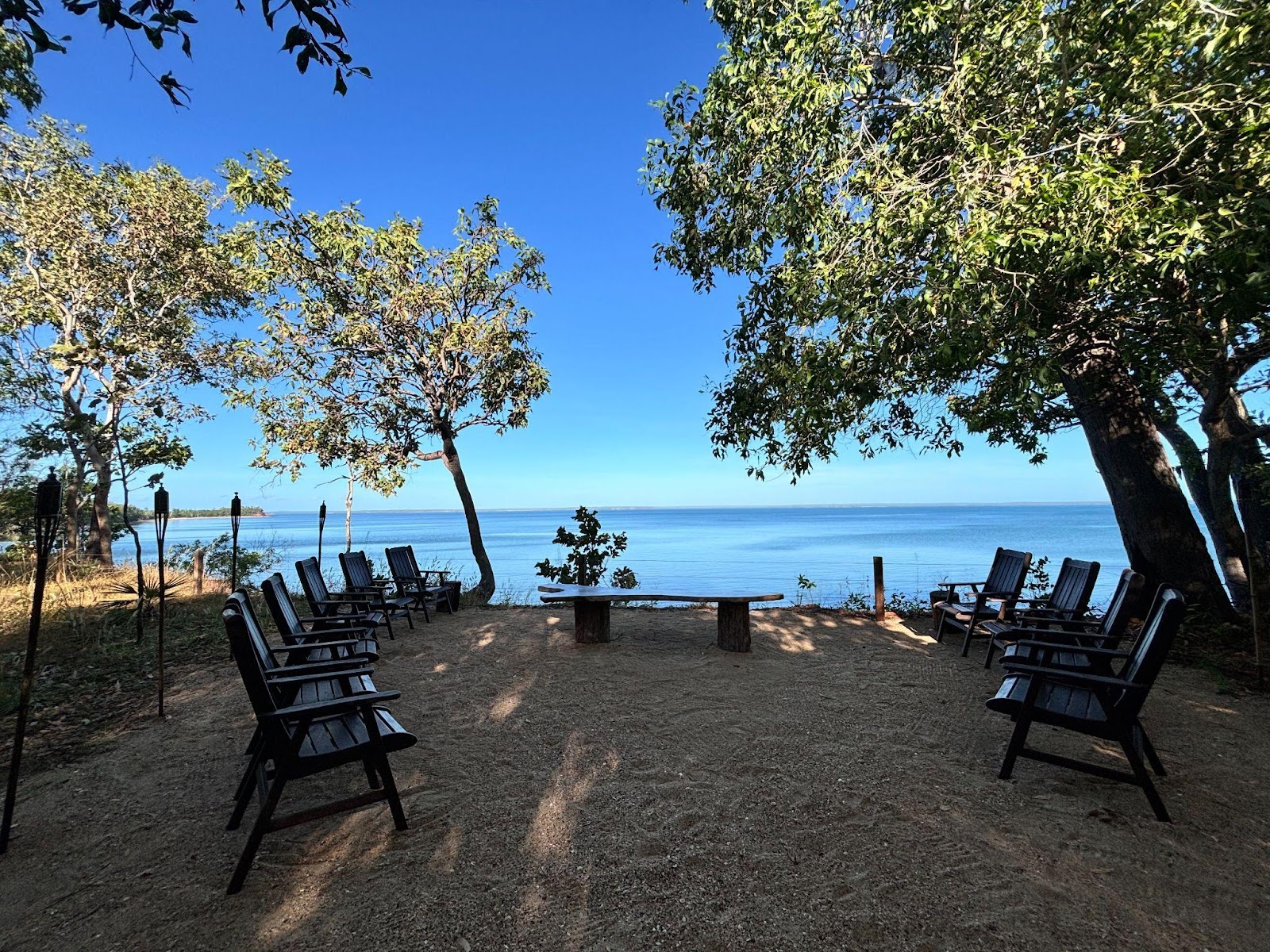
Campsite (Photo: Stephanie Zheng)
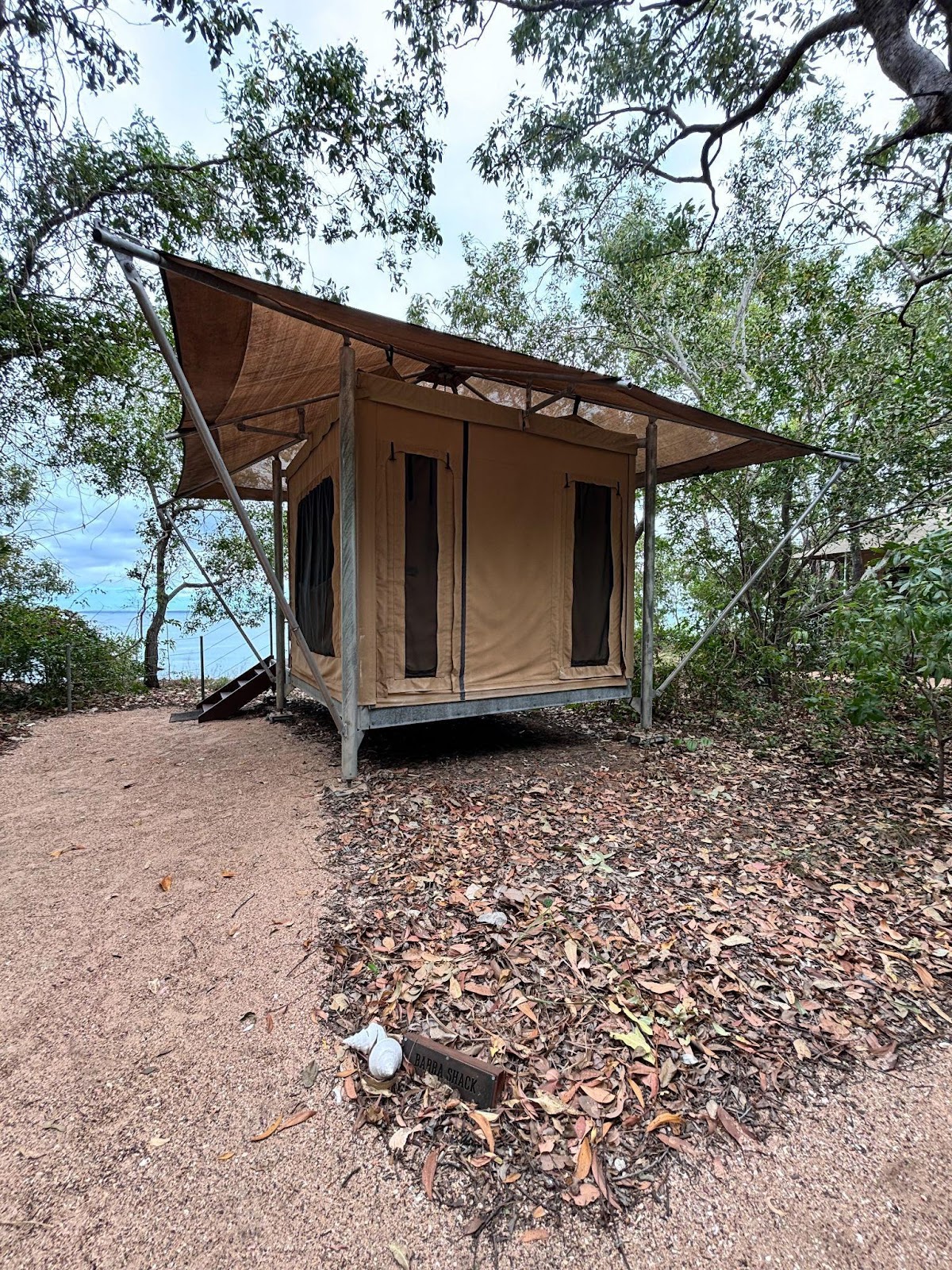
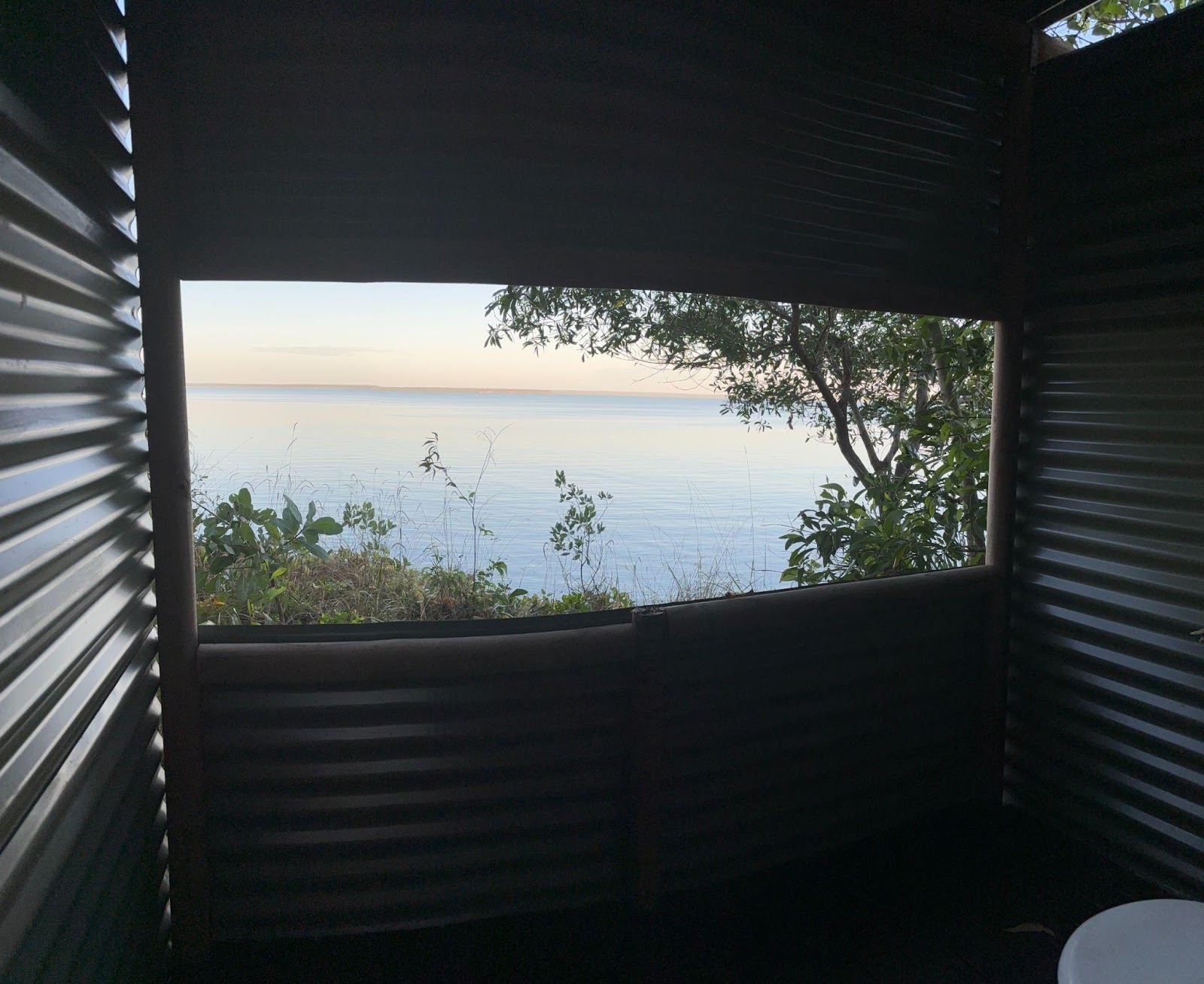
Our accommodations for the next two nights at Cobourg Coastal Camp were rustic safari tents with a nostalgic scent reminiscent of sea salt and grandparents’ home. Despite the lack of air conditioning, the night temperatures were comfortably cool, and you might even require a blanket. The camp is also famous for boasting what many claim to be the best toilet view in Australia.
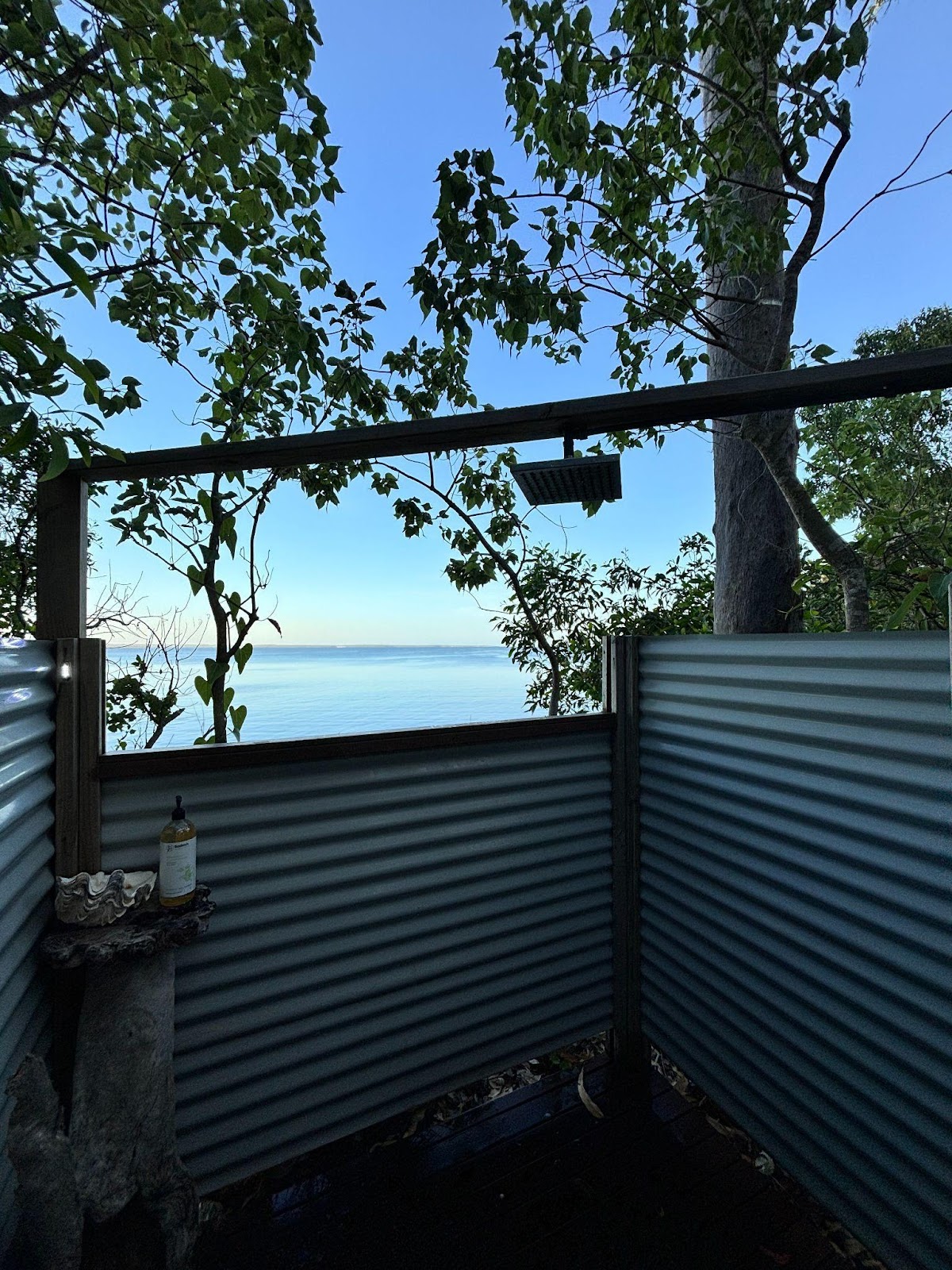
L: Best toilet view in Australia. R: Best shower view in Australia (Photo: Stephanie Zheng)
For those with a passion for fishing, Cobourg is a dream destination. This area, abundant with marine life, is one of the world’s most untouched fishing spots. It attracts serious fishermen from as far away as Singapore, drawn by the chance to catch species like golden snapper, giant trevally, cod, coral trout, and Spanish mackerel. Cobourg’s diverse marine environments offer endless fishing opportunities, and for the truly adventurous, there’s always the option of trying to catch a big shark.
The fishing boat for plenty of reel action with our fishing guide, Travis. (Photo: Stephanie Zheng)
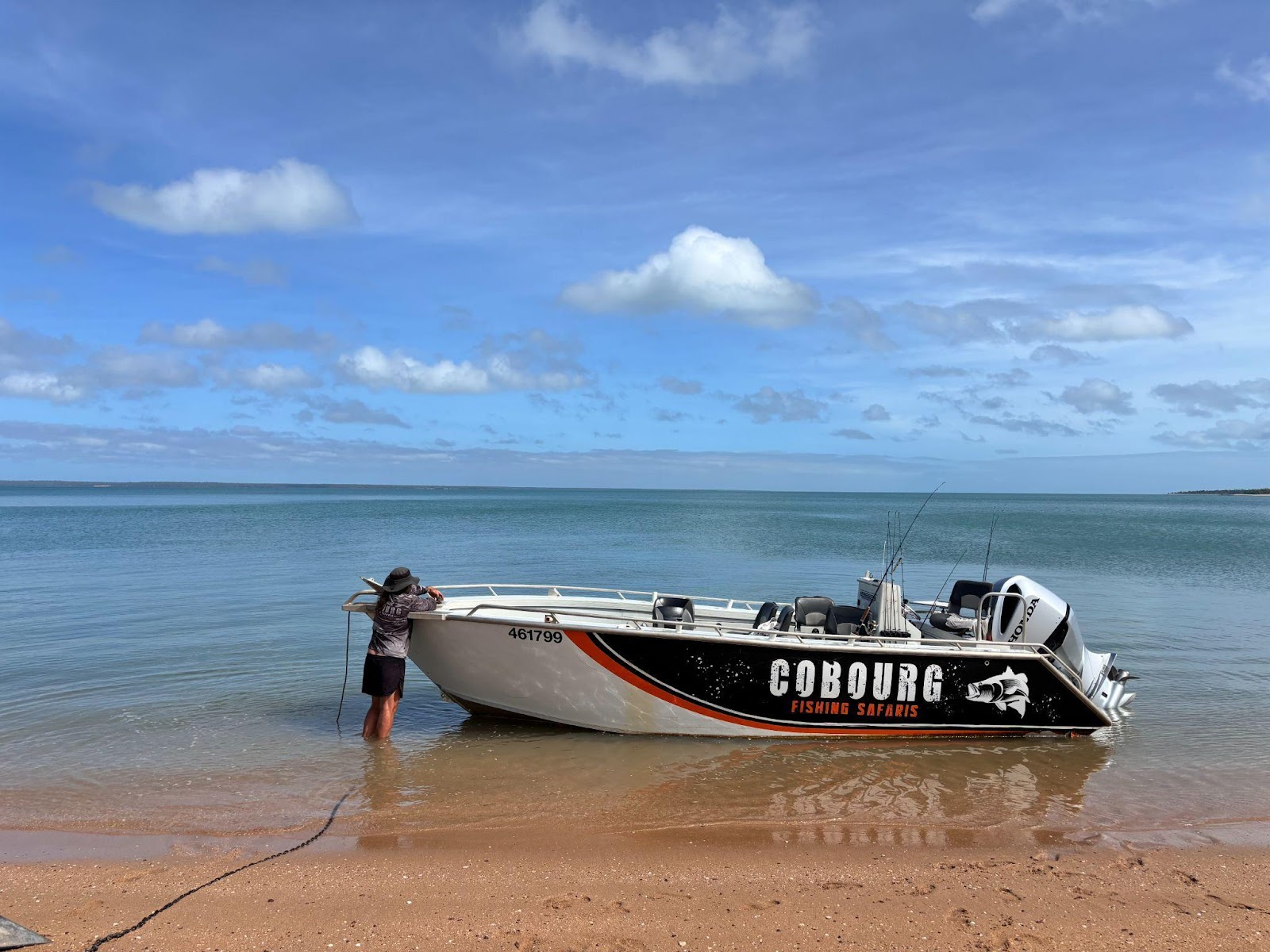
The following day, we delved into the park’s 2,000 square kilometres of unspoiled marine habitats, spending our time fishing and exploring. Under the expert guidance of our fishing guide, Travis, we quickly found ourselves in a region teeming with aquatic wildlife. Within just an hour, we had caught three golden spot estuary cod—more than enough to satisfy our group for dinner that evening. Back at camp, we savoured a freshly prepared seafood dinner, made from our own catch and cooked to perfection in the camp kitchen—a fitting and delicious reward for our day’s efforts.
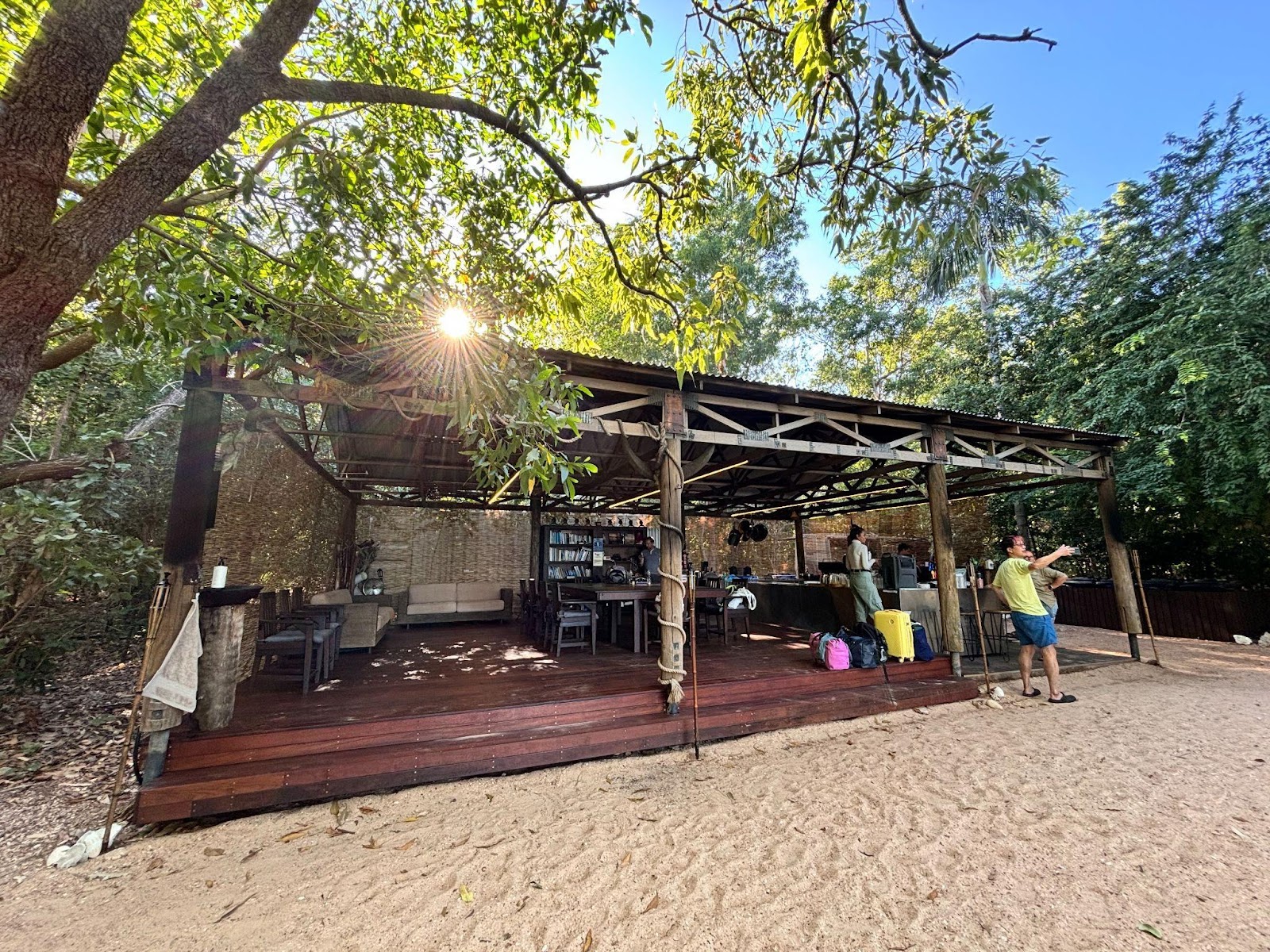
Main dining hall of Cobourg Coastal Camp (Photo: Stephanie Zheng)
But fishing is just one of the many activities that Cobourg has to offer. Visitors can explore the historic ruins of the Victoria Settlement, or visit the world’s first RAMSAR wetland of international importance, home to freshwater paperbark swamps and billabongs just 100 meters from the coastline. The northern beaches, often used as turtle nesting grounds, are ideal for exploration at low tide, when exposed coral reefs and rock pools reveal a hidden world of marine life.
Or, do nothing. Simply kicking back and enjoying the rare absence of modern life’s interruptions is just as rewarding.
On the co-pilot’s seat in the private air charter with Territory Air Services that will bring us back to Darwin, I watched the billabongs get smaller and smaller as they glistened in the sun. It’s impossible to spot the numerous footprints we have left in this part of the world.
Getting there
Getting to Darwin from Singapore is no adventure, with a direct flight less than five hours on Singapore Airlines. You can also fly in from domestic airports in Australia, such as from Adelaide, Brisbane, Sydney and Melbourne.
The 5-Day Kakadu, Arnhem Land and Cobourg Peninsula package with Ventures North cost AUD$4,190.
We were invited to Northern Australia by Tourism Australia, but opinions are our own.